What Does Vegan Skincare Actually Mean in India?
Share
Spoiler: 'vegan' has no legal definition in Indian cosmetics regulation either. Here is what the word should mean — and how to know if a brand actually means it.
You have seen it on packaging. You have seen it in brand bios. You have almost certainly seen it on products that, if you looked more carefully, you would have questions about.
Vegan.
It sounds straightforward. No animal products. Simple.
But in the Indian beauty market in 2025, the word vegan is used the way the word natural is used — liberally, without regulation, and often without honesty.
So let us be specific. Because specificity is the only thing that separates a commitment from a claim.
What vegan actually means.
A vegan product contains no ingredients derived from animals. Not extracted from animals. Not produced by animals. Not a byproduct of animal processing.
That is the baseline. Nothing more, nothing less.
It does not automatically mean the product is cruelty-free. It does not mean it is clean, safe, or good for your skin. A product can be vegan and still contain parabens, synthetic fragrance, sulphates, and petroleum derivatives. Vegan describes the source of ingredients. It says nothing about what else is in the formula.
This distinction matters. A lot of marketing collapses it deliberately.
Vegan describes origin. Cruelty-free describes testing. Clean describes the formulation. They are three different promises. You should expect all three.
What is hiding in non-vegan skincare — and why you probably don't know.
Most people are surprised to learn how many common skincare ingredients are animal-derived. The INCI names are designed to be unrecognisable. Here are the ones worth knowing by name:
Carmine (CI 75470) — the red pigment in most lipsticks, blushers, and tinted products. Made from crushed cochineal scale insects — approximately 70,000 insects per kilogram of dye. It is in products marketed as 'rich', 'pigmented', and 'long-lasting'. It is never labelled 'made from insects'.
Lanolin — wool fat, extracted from sheep during industrial wool processing. Present in many 'nourishing' and 'healing' moisturisers, lip balms, and barrier creams. A known allergen for a significant portion of the population. Rarely disclosed in plain language.
Keratin — a structural protein derived from ground-up animal hooves, horns, feathers, and hair. Common in hair care and some skin-tightening products. The packaging often says 'keratin-enriched' without specifying the source.
Squalene (shark-derived) — traditionally extracted from shark liver oil. Used as an emollient and penetration enhancer in moisturisers. Now increasingly replaced with plant-derived olive squalane — but the two are not always distinguished on packaging. If a product says squalene rather than squalane, ask where it comes from.
Beeswax (Cera Alba) — extracted from bee honeycombs. Common in lip products, creams, and balms as a thickener and emollient. Technically an animal product, though some vegans disagree about whether bee-derived ingredients count. At Simree, they do not.
Collagen and elastin — usually bovine or marine-derived. Present in anti-ageing serums and creams. Topically applied collagen cannot penetrate the skin's dermal layer regardless — so it delivers no benefit beyond what a plant-based humectant would, while carrying the full ethical cost of animal processing.
The Indian context specifically.
India has no mandatory certification for vegan cosmetics. There is no government-approved logo, no regulated standard, no independent body that a brand must satisfy before printing 'vegan' on its label.
Some brands carry international certifications — The Vegan Society (UK), PETA's Beauty Without Bunnies, Leaping Bunny. These have real standards and real auditing behind them. But they are voluntary. Most Indian brands carry none of them.
What this means in practice: any brand can call any product vegan. The word costs nothing and requires nothing.
The only real proof of a vegan commitment is a full, honest ingredient list — one that uses plain language, not INCI names alone, and that a brand is willing to explain line by line.
India also has an additional layer of complexity. Many traditional Ayurvedic formulations contain animal-derived ingredients — honey, ghee, cow's milk, even animal fat — that are considered sacred or healing within that tradition. There is nothing wrong with this tradition. But it means that 'natural' and 'Ayurvedic' do not imply vegan. The two things are entirely separate.
What Simree means when we say vegan.
We mean no animal-derived ingredients. In any product. In any category.
Not in the skincare. Not in the makeup. Not in the lip products. Not in anything.
No carmine — which means our Tinted Trinity uses plant-derived pigments for colour, not crushed insects.
No lanolin — which means our face oils use olive squalane and shea butter instead of wool fat.
No beeswax — which means our lip formulations are sealed and conditioned with plant-based alternatives.
No marine or bovine collagen — which means our anti-ageing products work with ingredients that are actually proven to support the skin barrier from the outside: Saffron's crocin compound, Bakuchi's natural retinol activity, Rosehip's Vitamin A and C profile.
We test on ourselves. We tested on our community of real people. The list of animals we have ever tested on: zero.
That is not a brand position. It is the reason the brand exists.
The full Simree range — 100% vegan, every product.
Every product below is vegan, cruelty-free, and paraben-free. Every ingredient is listed in full on our ingredients page. No hiding behind INCI names without explanation.
→ Tinted Trinity — Lip, Eye & Cheek Tints — Plant-derived pigments. No carmine. No beeswax. Colour that comes from the earth, not from insects. View Product →
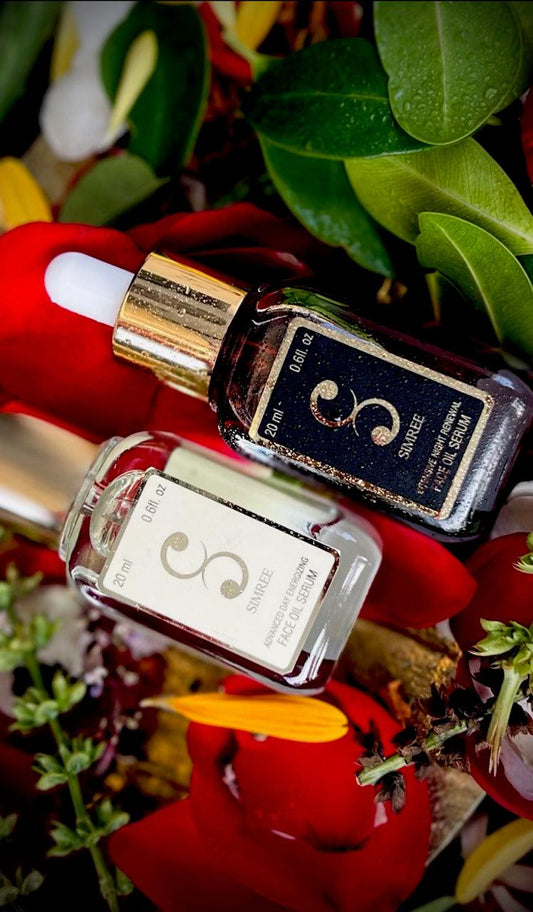
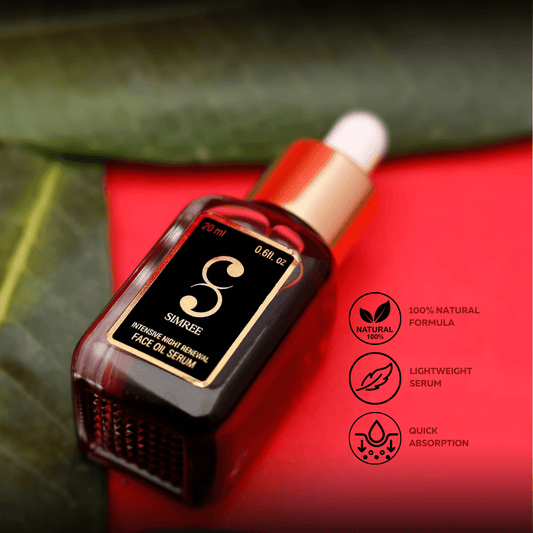
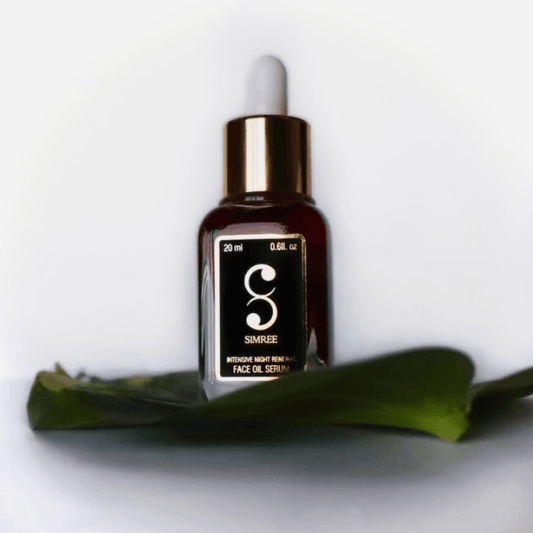
→ Intensive Night Renewal Face Oil Serum — Saffron and Bakuchi (natural retinol). No animal-derived collagen. Anti-pigmentation and anti-ageing, built entirely on plant intelligence. View Product →
→ Advanced Day Energizing Face Oil Serum — Blue Tansy, Jojoba, Rosehip. Every ingredient plant-sourced. Olive squalane — not shark squalene — for emolliency. View Product →
→ Acne Control Balancing Face Mist — Blue Tansy, Neem, Tea Tree. No lanolin. No beeswax. Sebum balance and inflammation control — vegan from first ingredient to last. View Product →
→ Moisture Lock Ultra Hydrating Face Mist — Deep hydration for dry to normal skin. Zero animal-derived emollients — none were needed. View Product →
→ Age Reverse Replenishing Face Mist — Saffron, Niacinamide, Vitamin C. Collagen support without bovine or marine collagen. The science works. The ethics hold. View Product →
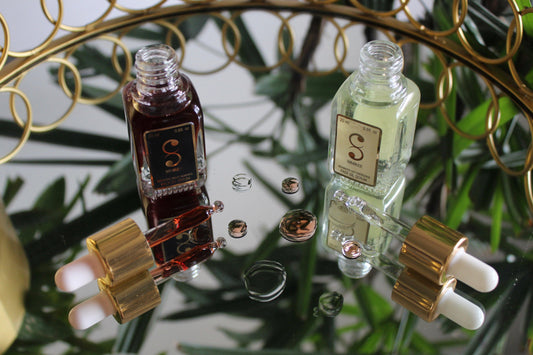
→ AM/PM Face Oil Serum Duo — Day and night, fully covered. Both serums, completely vegan. The complete Simree skin ritual — for all humans. View Product →
The question worth asking.
Before you buy any product that calls itself vegan, ask one question: can this brand name every ingredient and tell me exactly where it comes from?
If the answer is yes — and if the ingredient list confirms it — you have your answer.
If the answer is silence, or marketing language, or a redirect to the brand values page without an actual ingredient list — that is your answer too.
Your nani never needed a vegan certification. She knew what was in the pot because she put it there herself.
That standard still applies.
At Simree
Vegan, cruelty-free, and fully transparent — across every product, every category, every ingredient. No exceptions, no fine print.
Explore the complete Simree range at simreecosmetics.com/collections/all.
Read the full ingredient list for every product at simreecosmetics.com/pages/simree-natural-ingredients.
— Simree Cosmetics | www.simreecosmetics.com