Why Does “Natural” Skincare Still Contain Parabens?
And how to actually read an ingredient list — without a chemistry degree.
You picked up a product because it said natural on the front.
Maybe it had a leaf on the label. Maybe the packaging was kraft paper brown. Maybe it said free from harsh chemicals — and you believed it, because why would you not?
Then you turned it over.
Somewhere in that small-print list — between the ingredients that sound like plants and the ones that sound like industrial solvents — there it was.
Methylparaben. Or propylparaben. Or butylparaben.
A paraben. In your natural skincare.
“Natural” has no legal definition in India. Any brand can print it on their packaging. No certification required. No standard to meet.
What are parabens, exactly?
Parabens are a family of synthetic preservatives. They prevent bacteria, mould, and yeast from growing in your skincare products — which is a real and valid function. A product without a preservation system can become a petri dish within weeks.
The problem is not that parabens preserve. The problem is what else they do.
Parabens are endocrine disruptors. They mimic oestrogen in the body. Studies have detected parabens in human breast tissue. The EU has restricted certain parabens in cosmetics — particularly in products used on infants and in the nappy area — precisely because the science raised enough concern to act on.
India has not followed suit. There is no regulation that prevents a brand from using parabens and calling their product natural in the same breath.
So how does a 2018 natural 2019 product still contain them?
Because natural on a product label means whatever the brand decides it means.
A product can contain one botanical extract — say, aloe vera — and twenty-three synthetic ingredients, and still be marketed as natural skincare. The aloe earns the label. The other twenty-three get to travel under it.
This is not a niche practice. It is standard.
Brands use natural as a marketing claim, not a commitment. It signals aspiration. It triggers trust. It is designed to stop you from reading further.
Your grandmother would have called this dishonest. She would be right.
You check your food labels. When did you last check your moisturiser's?
How to actually read an ingredient list.
Skincare ingredient lists follow INCI — the International Nomenclature of Cosmetic Ingredients. Every ingredient is listed by its standardised scientific name, in descending order of concentration. The ingredient that makes up the largest proportion of the product is listed first.
This means the first five ingredients matter most. They constitute the majority of what you are putting on your skin. Everything after the 1% threshold — usually around position ten to fifteen in a typical formulation — is present in trace amounts.
The words to know — before you buy anything:
Parabens — look for any ingredient ending in -paraben. Methylparaben, ethylparaben, propylparaben, butylparaben. Any of these means synthetic preservatives with endocrine-disrupting potential.
Phenoxyethanol — the most common paraben replacement. It is synthetic. It is permitted in 'natural' products. It is present in a very large number of clean beauty products. At high concentrations it can be irritating, particularly for sensitive skin and infants.
Fragrance / Parfum — a single word that can hide up to several hundred individual chemicals, none of which are required to be disclosed. It is the most common cause of contact dermatitis in skincare. If a product lists 'fragrance' or 'parfum' without further detail, you do not know what you are putting on your face.
PEG compounds — polyethylene glycols. Synthetic penetration enhancers derived from petroleum. The concern is not the PEG itself — it is that they increase the skin's absorption of everything else in the formula, including any harmful ingredients present.
Synthetic colourants — CI followed by a number. CI 77491 is iron oxide (fine). CI 75470 is carmine — crushed insects. Know the number, know what you are choosing.
Products that show you exactly what's inside. And why.
At Simree, every product page lists every ingredient with a plain-language explanation. Not because we have to. Because you deserve to understand what you are applying to your skin.
If your concern is acne, excess oil, or congested skin:
→ Acne Control Balancing Face Mist — Blue Tansy, Neem & Tea Tree — calms inflammation, controls sebum, no parabens, no synthetic fragrance.
If your concern is dehydration, dullness, or a compromised skin barrier:
→ Moisture Lock Ultra Hydrating Face Mist — Promotes collagen production, hydrates deeply. Every ingredient visible, every ingredient chosen for a reason.
If your concern is pigmentation, uneven tone, or early signs of ageing:
→ Age Reverse Replenishing Face Mist — Saffron, Niacinamide & Vitamin C — the science of brightness, without the synthetic shortcuts.
If you are ready to go deeper — past mists, past moisture, into genuine skin renewal:
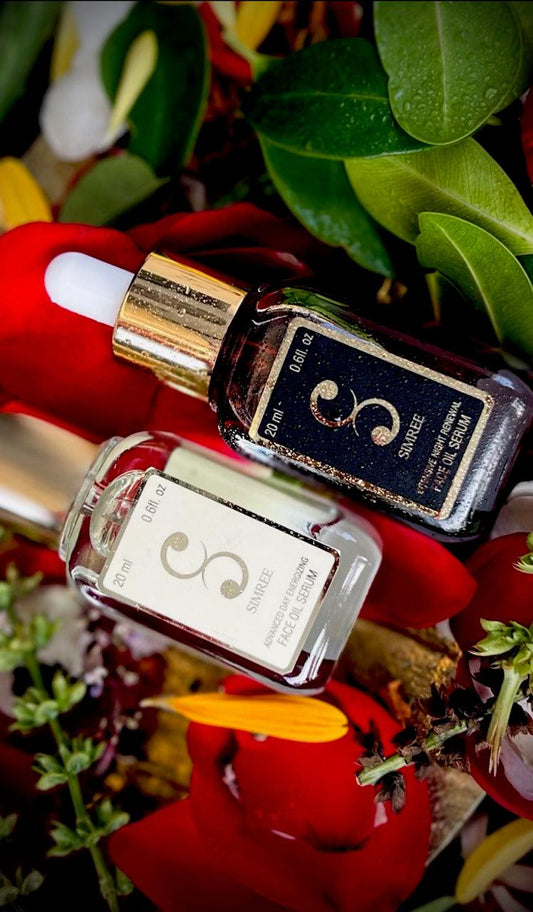
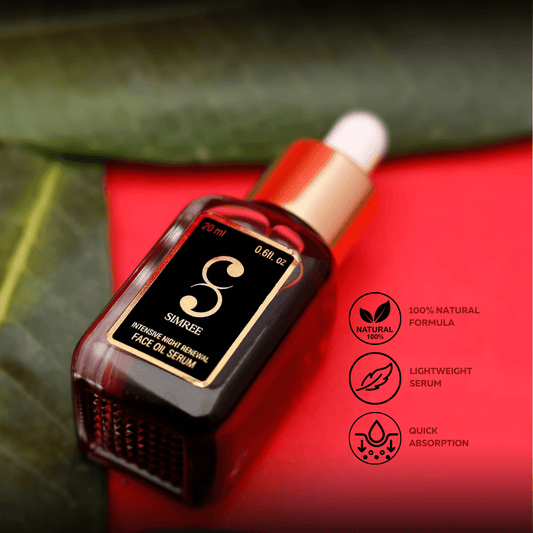
→ Intensive Night Renewal Face Oil Serum — Saffron & natural retinol (Bakuchi). What your nani used, validated by modern dermatology. No parabens. No synthetics. Full transparency.
For skin that needs calm, protection, and daily balance:
→ Advanced Day Energizing Face Oil Serum — Blue Tansy, Jojoba & Rosehip. Clean actives that work without the industry's usual compromises.

What Simree uses instead of parabens.
Preserving a formula without synthetic preservatives is harder. It requires better ingredient sourcing, more precise formulation, and a genuine commitment to not cutting corners because corners are cheaper to cut.
Our preservation approach uses the natural antimicrobial properties of ingredients like neem, tea tree, and Blue Tansy — alongside packaging design that minimises contamination. No methylparaben. No propylparaben. No phenoxyethanol.
You can check. Every ingredient is listed. Every ingredient is explained.
Read the full breakdown at Our Ingredients — where we go ingredient by ingredient, with the traditional use and the science behind each one.
The question worth asking.
Your nani did not have a list of prohibited ingredients she cross-referenced before making her face pack. She didn't need one. She knew exactly what was in it because she put it together herself.
Turmeric. Rose water. Sandalwood. Saffron.
Nothing that needed a safety disclaimer. Nothing that mimicked a hormone. Nothing hidden behind a word designed not to be understood.
That standard is not unrealistic. It is not nostalgic. It is what skincare should still be.
The next time you pick up a product that calls itself natural — turn it over. Read the back. Apply the same attention you give to your food.
Your skin is your body's largest organ. It absorbs what you put on it.
It deserves the same scrutiny as everything else you choose.
At Simree
Every formula is built on the conviction that clean means transparent — full ingredient lists, plain-language explanations, and nothing hiding behind a scientific name. Browse the full skincare range or read about how we formulate.
Clean, meaning: no hidden nasties, no animal-derived ingredients, no lies.
— Simree Cosmetics | www.simreecosmetics.com